
Panama foundation · Fundación de Interés Privado
Establish a Panama private interest foundation with legal support in English. We help define how assets will be administered, who may benefit and how decisions should continue over time. Formation can be handled remotely.
Formation from USD 3,000 · including the first-year government charge and resident agent
At a glance
A Panama private interest foundation is a separate legal entity governed by Law 25 of 1995. Its charter must state an initial endowment of at least USD 10,000. It has a foundation council and a Panamanian resident agent, but no shareholders. It is not a vehicle for regular commercial trading. Beneficiary arrangements and cross-border tax treatment require individual review.
Panamanian legal services: Karen Dorcy · Abogada, Republic of Panama · Licence No. 10179 · English service information updated 25 October 2026
Panama private interest foundation costs
The formation package covers the legal setup. The endowment and additional services are separate.
FOUNDATION FORMATION PACKAGE
from USD 3,000 one-off
- Foundation charter (Acta Fundacional) under Law 25 of 1995, notarised in Panama
- Private regulations defining beneficiaries and distribution arrangements
- Registration with the Public Registry of Panama
- Resident agent for the first year
- First-year annual government charge: USD 400 Tasa Única
- Documents digitally, with originals by courier
Advice and communication in English. The statutory initial endowment is not included in the fee.
Optional services
Additional scope and fees are confirmed in your quotation.
- Professional foundation council: support with an appropriate council arrangement
- Panama banking support: preliminary compliance review, bank selection and application preparation
- Panama City address: mail receipt and forwarding
- Tax registration (RUC/NIT): assistance with DGI registration
From year two: USD 400 annual government charge plus USD 800 resident agent fee. Council services, accounting, asset transfers, banking and other administration may add to this depending on the agreed scope.
1995
Law 25: foundation framework
USD 10,000
minimum stated initial endowment
0
trips required for formation
USD 400
annual government charge
ROLES, RESPONSIBILITIES AND DISCLOSURE
How a Panama foundation is organised
A public charter and private regulations define the arrangement.
Agree who can act, who oversees decisions and how beneficiaries are treated before transferring assets.
REQUIRED
Founder
Fundador
The founder establishes the foundation and defines its purposes. Any reserved powers, such as amendment rights, must be designed carefully and assessed for their legal and tax consequences.
Identified in the public charter
REQUIRED
Foundation council
Consejo Fundacional
The council administers the foundation under its governing documents and applicable law. Its powers, duties and decision-making procedures should be clear from the outset.
Publicly registered
OPTIONAL
Protector
Protector
A protector or supervisory arrangement may oversee council decisions. Consent, removal and amendment powers depend on the governing documents; retaining control can also affect treatment abroad.
Public if named in the charter
REQUIRED
Resident agent
Agente Residente
A qualified Panamanian lawyer or law firm acts as resident agent and fulfils applicable identification, beneficial ownership and record-keeping responsibilities. This is separate from day-to-day asset management.
Publicly registered
BENEFICIARY ARRANGEMENTS
Beneficiaries
Beneficiarios
The documents define who may receive benefits, when and subject to which conditions. Entitlements should be coordinated with the family’s circumstances and the treatment of distributions abroad.
Private where designated in private regulations
EXAMPLE
One possible arrangement
A professional council administers the foundation, a designated protector oversees specified decisions, and family members are beneficiaries. The appropriate allocation of control depends on your objectives and cross-border advice.
- Discuss governance and continuity
Public: the registered foundation charter and the information it contains, including council and resident agent. Private does not mean anonymous: private regulations are distinct from mandatory identification and disclosure to competent authorities and banks.
Form a Panama foundation in four steps
Begin with the people, the assets and the decisions the structure must support.
Initial consultation
Discuss intended beneficiaries, control, asset locations and what should happen on incapacity or death. Coordinate with your adviser in each relevant jurisdiction before proceeding.
Discuss your plans with Karen Dorcy
Documents and compliance
Prepare identification, address evidence, details of the people involved, asset information and source of wealth. References, certification and additional documentation may be required.
Requirements confirmed for your case
Charter and registration
The legal team prepares the charter, coordinates notarisation and registration, and drafts the private regulations. The documents must reflect the arrangement you have agreed.
Handled in Panama
Handover and asset transfers
Receive the documents and plan how assets will be transferred. Title formalities, taxes, bank acceptance and any separate company arrangements require their own assessment.
Digital documents and courier delivery
Indicative time to registration: 7–14 business days after complete documents and compliance clearance. Complex drafting or additional checks may extend this; asset transfers and banking have separate timelines.
What families use a Panama foundation for
A foundation has no shareholders. Its usefulness depends on the governing documents and the assets actually placed within it.
SUCCESSION PLANNING
Define how assets benefit future generations
Private regulations can establish beneficiary and distribution arrangements. Recognition, inheritance rules and procedures in countries where assets or family members are located still require local advice.
ASSET ADMINISTRATION
Coordinate assets under a defined framework
A foundation may hold assets or shares in a Panama corporation, subject to its purposes and applicable law. Review whether the additional structure is justified before moving assets.
CONTINUITY
Plan for a family living across borders
Define who can act if circumstances change, how a protector oversees decisions and how council members are replaced. Clear documents help; they do not remove the need for advice in each relevant jurisdiction.
Taxes and ongoing foundation obligations
Formation is the beginning of an ongoing arrangement. Plan its administration and cross-border consequences before funding it.
UPDATE: 25 OCTOBER 2026
Panama and the EU tax list
On 9 October 2026, the Council of the EU announced Panama’s removal from its list of non-cooperative jurisdictions for tax purposes. This does not establish the tax treatment of your foundation, contributions or distributions in another country.
Limits on commercial activity
A foundation is not designed for regular commercial trading. Article 3 permits non-habitual commercial activity and the exercise of rights arising from company shareholdings, subject to the foundation-purpose conditions in the law.
Accounting and records
Maintain the required accounting records and supporting documents. Confirm with the resident agent which records must be supplied and the applicable deadlines. Requirements depend on the foundation’s activities and regulations; non-compliance can lead to penalties.
Law 52 of 2016, as amended by Law 254 of 2021, and implementing regulations
Identification and disclosure
The resident agent must identify the relevant individuals and comply with beneficial ownership requirements. Private regulations do not remove obligations to authorities or bank due diligence. Do not plan around anonymity.
Law 129 of 2020 and applicable amendments
Tax consequences in your home jurisdiction
For US, Canadian, UK and other international clients, the classification of the foundation, reserved powers, contributions, income and distributions can produce different outcomes. Obtain advice before formation and before transferring assets.
Cross-border legal and tax coordination
A foundation is not a blanket shield against lawful claims. The origin, timing and legal effect of asset transfers require careful review.
Panama private interest foundation FAQ
The charter must state an initial endowment of at least USD 10,000. This is separate from our formation fee and is not a government charge. The proposed assets, funding arrangements and timing should be agreed with the legal team before formation.
Assets validly transferred belong to the foundation, not to you personally. Reserved powers, council appointments and protector provisions may influence decisions, but require careful drafting and can affect tax treatment abroad.
The foundation council normally consists of at least three natural persons, or it may be a legal person. The right arrangement depends on governance needs and the documents. Professional council services are quoted separately.
The charter is registered publicly. Beneficiary arrangements in private regulations are not the same as public registration, but relevant individuals must still be identified and mandatory disclosure requirements remain. Banks conduct their own checks.
There is no single answer for international clients. Your jurisdiction may classify the foundation differently and tax contributions, retained income or distributions. Have your adviser review the actual documents and powers before you transfer assets.
No. A Panama private interest foundation has its own legal framework and separate legal personality. A trust or a foundation established in another country may work differently. Similar purposes do not establish equivalent legal or tax treatment.
Our stated base from year two is USD 400 government Tasa Única plus USD 800 resident agent fee, totalling USD 1,200. Council services, accounting, tax filings and other administration may add to this depending on the foundation and your engagement.
English service information updated 25 October 2026. Panamanian legal services are provided by Karen Dorcy, Abogada, licence No. 10179. Your quotation and engagement define the scope. Advice on consequences in other jurisdictions comes from your adviser there.
Legal framework and official guidance
- Law 25 of 12 June 1995: private interest foundations
- Law 129 of 2020: beneficial ownership framework
- Law 52 of 2016 and Law 254 of 2021: accounting records
- Review the rules applicable to the proposed assets, activities and jurisdictions before funding the foundation
- Panama DGI: annual Tasa Única
Tell us what your family needs to plan for.
Discuss whether a Panama foundation fits, the proposed scope and the practical arrangements with Karen Dorcy. If you are still choosing a structure, start with our comparison hub.
Admitted in Panama · Licence No. 10179 · LL.M., Leibniz University Hannover · advice in English
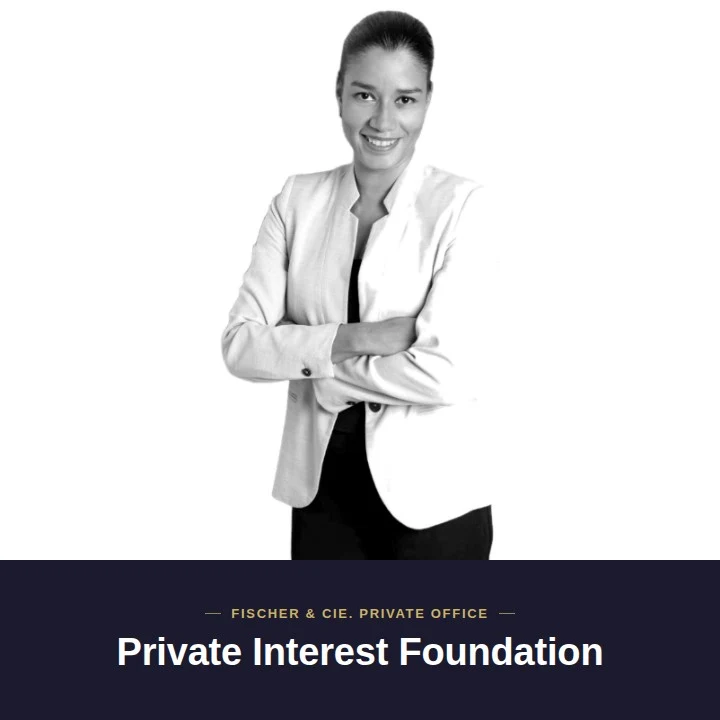
Plan the documents for the family’s future, including changes in people, circumstances and the countries involved.
Karen Dorcy, Abogada · Fischer & Cie. Private Office, Panama City